Refrigerant, capacitor, and compressor repairs: the hard line
DIY troubleshooter · causes ranked by how often each turns out to be the problem, in our judgment (no dataset ranks them)
Homeowners search for how to swap a capacitor, recharge refrigerant, or replace a compressor. These are the jobs on the wrong side of the line. This page lists the symptoms that point to them, what to check safely, and why we do not give repair steps.
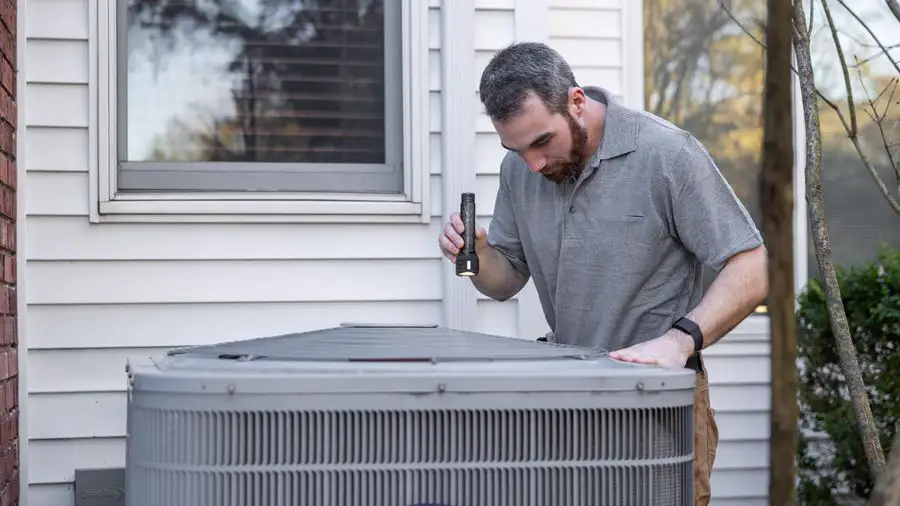
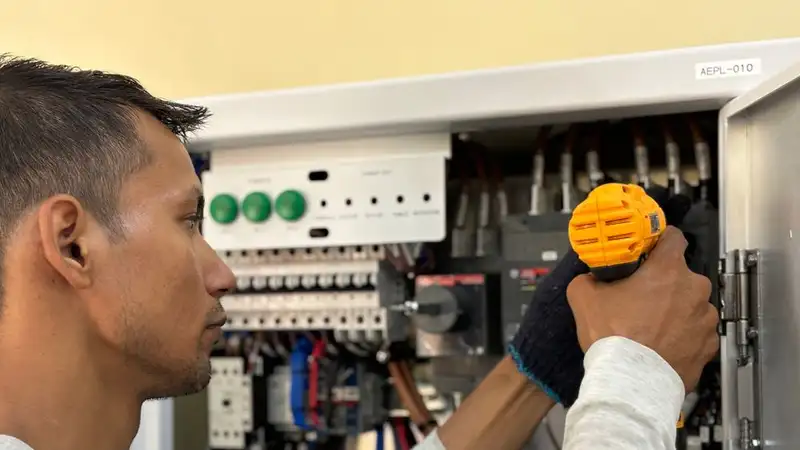
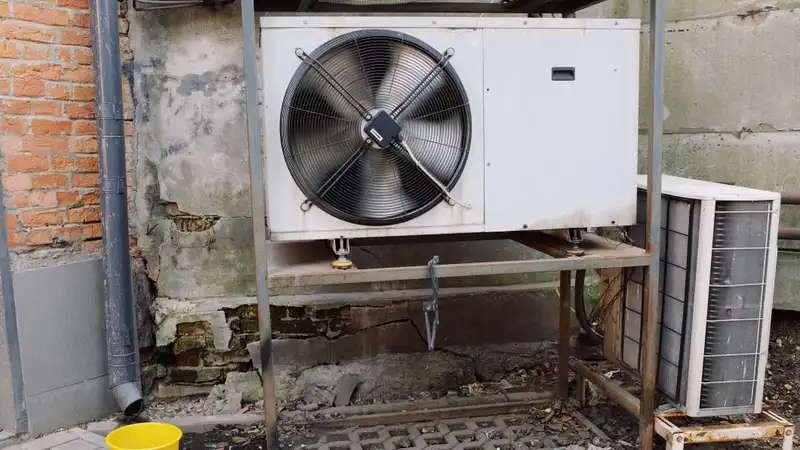
36-second explainer. Why refrigerant, capacitor and compressor repairs need a licensed pro, and what each reportedly costs.Stock footage via Pexels. Music: “Learn to Fly (Instrumental Version)” by Josh Woodward (Instrumental Versions) (Jamendo, CC BY). All credits.Stock photo, not our work. Photo by Kathleen Austin Kuhn via Pexels.
At a glance
Likely causes
5ranked, most likely first
Safe to check yourself
1free check
Needs a technician
44 with a hard-line hazard
Pro diagnostic visit
$190median, 62 reports
Source: HVACPro analysis of 1,611 homeowner-reported quotes and invoices in public Reddit posts dated 2025-01-01 to 2026-09-29. Each price is the median of the reports for that job, and "most" is the middle half of them (25th to 75th percentile). Homeowners reported these prices and we did not verify them.
Where this happens in your system
Refrigerant, capacitor, and compressor repairs: the hard line: the parts this page is about
1ThermostatThe wall control. It tells the system when to run.
2Air filterCatches dust before the air reaches the blower and coil.
3Indoor unit: blower and evaporator coil on this pageThe blower moves the air; the cold coil cools it.
4Ducts and ventsCarry cooled air to the rooms and bring return air back.
5Condensate drain line, pan and float switchCarries off the water the coil pulls out of the air.
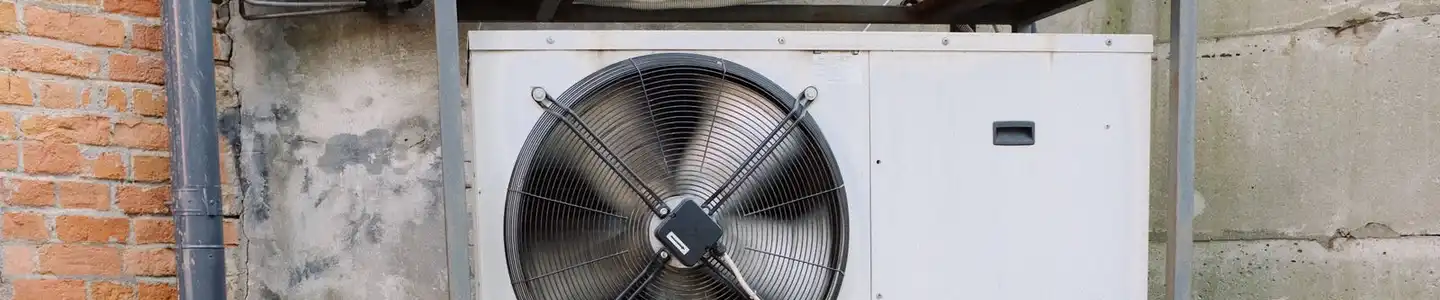
6Outdoor unit: compressor, fan and condenser coil on this pageMoves the heat from your house to the outdoors.
7Breaker panel and outdoor disconnectThe power feed to the system, and its local shut-off.
8Refrigerant lines on this pageTwo copper lines that link the indoor coil to the outdoor unit.
Simplified drawing, not to scale. Real systems vary: the indoor unit can sit in an attic or closet, the ducts can run in the attic or under the floor. Original illustration, not a photo.
How to checkOutdoor fan or compressor will not start, hums, or starts slowly; a bulged or leaking can is a visible sign, but seeing it means opening the panel. Note the symptom and stop.
Typical repair costCapacitor: Median $310 (most $220–$400), 26 homeowner reports
How to checkIce on the suction line, hissing, oily residue at joints, and weak cooling. A sealed system does not lose refrigerant through use; low charge means a leak that must be found and fixed.
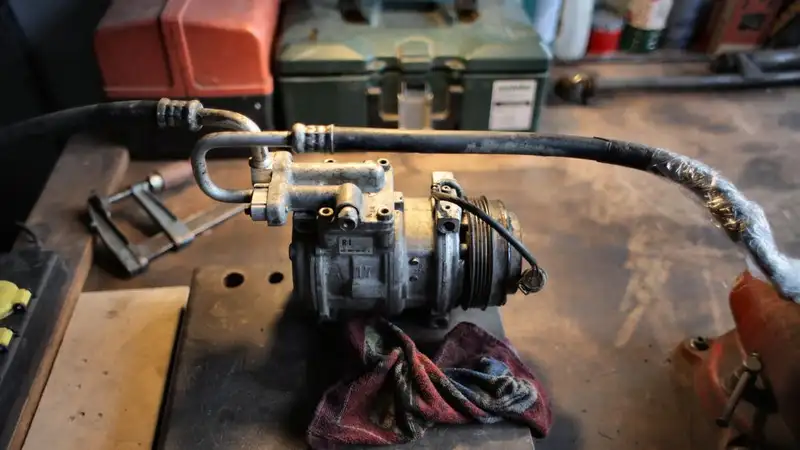
How to checkThe outdoor unit trips the breaker, hums without starting, or knocks loudly. A compressor is sealed and welded into the refrigerant circuit.
Typical repair costCompressor: Median $3,000 (most $1,900–$4,000), 43 homeowner reports
How to checkVisible dirt or matting on the outdoor coil fins with cooling that fades on hot afternoons. The condenser coil is on the outside of the cabinet.
Typical repair costFree to check.
Ranks are editorial, not measured. A price is what homeowners reported for that one part or job, not a quote for the cause on that row, and a cause can involve more than one part. Source: HVACPro analysis of 1,611 homeowner-reported quotes and invoices in public Reddit posts dated 2025-01-01 to 2026-09-29. Each price is the median of the reports for that job, and "most" is the middle half of them (25th to 75th percentile). Homeowners reported these prices and we did not verify them.
$190
Median pro diagnostic visit, from 62 homeowner reports
Source: HVACPro analysis of 1,611 homeowner-reported quotes and invoices in public Reddit posts dated 2025-01-01 to 2026-09-29. Each price is the median of the reports for that job, and "most" is the middle half of them (25th to 75th percentile). Homeowners reported these prices and we did not verify them.
Safe to do yourself
These checks need no tools beyond a screwdriver, a hose, or a vacuum. Do them in this order.
5
5. Dirty condenser coil driving up head pressure
Free to check
Turn off the outdoor breaker.
Remove debris around the cabinet and hose the fins gently from the outside.
Do not open the cabinet or bend the fins, and restore power when dry.
6 Outdoor unit: compressor, fan and condenser coil
The hard line: stop here and call a pro
The causes below are not DIY, and we give no repair steps for them. Each carries a specific danger.
HVACPro is a free referral service for homeowners, not an HVAC company. We don't do the work, and we may be paid by the contractor. Check any contractor's license on the state's lookup before you hire.
Pick your city
Every city below has an A-to-Z list of the businesses with an active Florida HVAC license there. The number on each chip is that count.
A pro visit starts with a diagnostic fee. Homeowners reported: Median $190 (most $100–$290), 62 homeowner reports. The repairs behind the causes on this page:
Refrigerant, capacitor, and compressor repairs: the hard line: repair prices homeowners reported
Middle half of reports Median
Capacitor N = 26
$310$220–$400
Refrigerant leak repair N = 32
$1,320$800–$3,000
Refrigerant recharge N = 48
$690$460–$1,200
Compressor N = 43
$3,000$1,900–$4,000
Contactor N = 3
too few reports to price
Reported price, U.S. dollars
Source: HVACPro analysis of 1,611 homeowner-reported quotes and invoices in public Reddit posts dated 2025-01-01 to 2026-09-29. Each price is the median of the reports for that job, and "most" is the middle half of them (25th to 75th percentile). Homeowners reported these prices and we did not verify them.
Show the repair prices as a table
Refrigerant, capacitor, and compressor repairs: the hard line: repair prices homeowners reported
Repair
Median
Most (middle half)
Reports
Capacitor
$310
$220–$400
26
Refrigerant leak repair
$1,320
$800–$3,000
32
Refrigerant recharge
$690
$460–$1,200
48
Compressor
$3,000
$1,900–$4,000
43
Contactor
Too few reports to price
3
These are national prices. We do not have enough Tampa Bay outer ring reports to publish a local one.
Source: HVACPro analysis of 1,611 homeowner-reported quotes and invoices in public Reddit posts dated 2025-01-01 to 2026-09-29. Each price is the median of the reports for that job, and "most" is the middle half of them (25th to 75th percentile). Homeowners reported these prices and we did not verify them.
1free check you can do yourself
4causes that need a technician
4hard-line hazards: pro only
Utility rebates
No utility rebate applies to this repair. The programs on file pay for replacement equipment or a tune-up, not for a repair like this one.
Is it legal to recharge my own AC with refrigerant?
No. EPA says Section 608 certification is required to recharge appliances, and refrigerant for stationary appliances is sold only to certified technicians or the companies that employ them. EPA also prohibits knowingly venting refrigerants, including R-410A, while servicing air conditioning equipment. If your air conditioner leaks, EPA says to ask your technician to locate and repair the leak instead of topping it off.
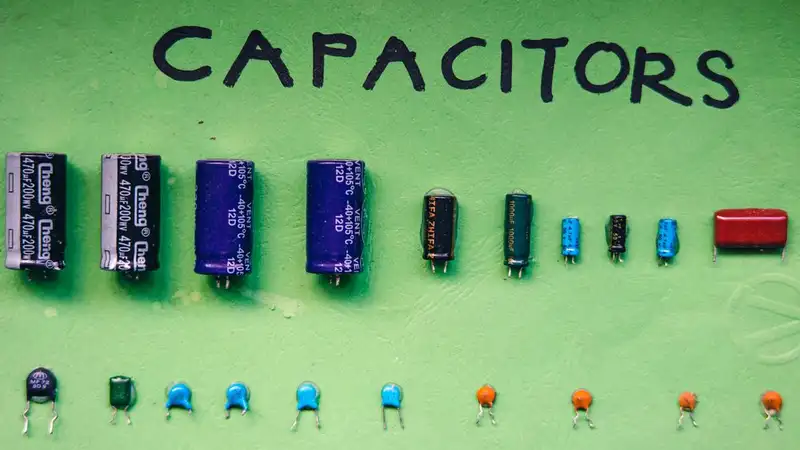
We do not give steps for it. Carrier says AC capacitors store high-voltage electricity that can cause serious injury or death even when the power is disconnected, and that a wrong voltage or microfarad rating can damage your system.
Trane says capacitors should be tested, discharged, or replaced only by a trained HVAC professional. OSHA requires that capacitors be discharged when their stored energy might endanger personnel.
Carrier lists these signs of a failing compressor: no cool air, strange noises such as grinding, squealing, or banging, a tripped circuit breaker, and overheating. A failed capacitor can stop a compressor from starting, and Trane says a failed start capacitor can cause a loud humming noise. Have an HVAC professional diagnose the root cause before you assume the compressor is bad.
In our price data, homeowners reported a median of $310 for a capacitor (26 reports) and $3,000 for a compressor (43 reports). Compressor work is not a DIY job.