DIY troubleshooter · causes ranked by how often each turns out to be the problem, in our judgment (no dataset ranks them)
The noise type matters more than the volume. Buzzing, humming, rattling, squealing, grinding, and clicking each point to different parts, and a few of them mean you should turn the system off now.
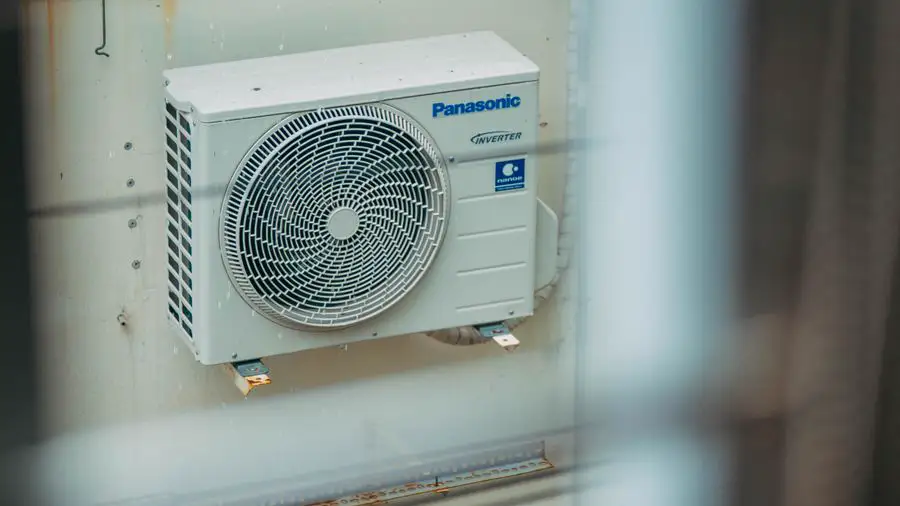
36-second explainer. How to read buzzing, rattling, squealing and grinding from an AC and when to shut it off.Stock footage via Pexels. Music: “Thrilled hands holding” by Tymphony (Jamendo, CC BY-SA). All credits.Stock photo, not our work. Photo by FOX ^.ᆽ.^= ∫ via Pexels.
At a glance
Likely causes
6ranked, most likely first
Safe to check yourself
3free checks
Needs a technician
32 with a hard-line hazard
Pro diagnostic visit
$190median, 62 reports
Source: HVACPro analysis of 1,611 homeowner-reported quotes and invoices in public Reddit posts dated 2025-01-01 to 2026-09-29. Each price is the median of the reports for that job, and "most" is the middle half of them (25th to 75th percentile). Homeowners reported these prices and we did not verify them.
Where this happens in your system
AC making noise (buzzing, rattling, squealing): the parts this page is about
1ThermostatThe wall control. It tells the system when to run.
2Air filter on this pageCatches dust before the air reaches the blower and coil.
3Indoor unit: blower and evaporator coil on this pageThe blower moves the air; the cold coil cools it.
4Ducts and ventsCarry cooled air to the rooms and bring return air back.
5Condensate drain line, pan and float switchCarries off the water the coil pulls out of the air.
6Outdoor unit: compressor, fan and condenser coil on this pageMoves the heat from your house to the outdoors.
7Breaker panel and outdoor disconnectThe power feed to the system, and its local shut-off.
8Refrigerant linesTwo copper lines that link the indoor coil to the outdoor unit.
Simplified drawing, not to scale. Real systems vary: the indoor unit can sit in an attic or closet, the ducts can run in the attic or under the floor. Original illustration, not a photo.
How to checkA whooshing, fluttering, or whistling from the air handler or vents. A loose door, an ill-fitting filter, or an undersized return grille whistles.
How to checkLoud clanking, knocking, or a hard metallic buzz from the outdoor unit with weak cooling. Turn the system off; running it further can turn a repair into a replacement.
Typical repair costCompressor: Median $3,000 (most $1,900–$4,000), 43 homeowner reports
Ranks are editorial, not measured. A price is what homeowners reported for that one part or job, not a quote for the cause on that row, and a cause can involve more than one part. Source: HVACPro analysis of 1,611 homeowner-reported quotes and invoices in public Reddit posts dated 2025-01-01 to 2026-09-29. Each price is the median of the reports for that job, and "most" is the middle half of them (25th to 75th percentile). Homeowners reported these prices and we did not verify them.
$190
Median pro diagnostic visit, from 62 homeowner reports
Source: HVACPro analysis of 1,611 homeowner-reported quotes and invoices in public Reddit posts dated 2025-01-01 to 2026-09-29. Each price is the median of the reports for that job, and "most" is the middle half of them (25th to 75th percentile). Homeowners reported these prices and we did not verify them.
Safe to do yourself
These checks need no tools beyond a screwdriver, a hose, or a vacuum. Do them in this order.
1
1. Loose panel, debris, or a branch in the outdoor fan
Free to check
Turn off the outdoor breaker so the fan cannot start.
Remove leaves or a stick from inside the top grille and from around the base.
Tighten loose cabinet screws.
Restore power and listen for 5 minutes.
6 Outdoor unit: compressor, fan and condenser coil
2
2. Unit not level, or worn vibration pads
Free to check
Turn the breaker off and check the pad with a level.
Slip a rubber or composite shim under the low corner.
Do not stress the refrigerant lines while adjusting; a technician should re-level a heavily tilted unit.
6 Outdoor unit: compressor, fan and condenser coil
3
3. Dirty blower wheel or a loose filter door
Free to check
Check that the filter is seated flat and the access panel latches tight.
Replace a filter that is too thin or the wrong size.
Persistent whistling at a return grille usually means it needs a larger opening, which is a pro job.
3 Indoor unit: blower and evaporator coil
The hard line: stop here and call a pro
The causes below are not DIY, and we give no repair steps for them. Each carries a specific danger.
Needs a technician, but not a hard-line hazard
4. Worn fan motor bearings
A failing motor can seize and overheat, and the shaft turns fan blades that can injure fingers. Shut the system off and do not reach in to spin the blade by hand.
HVACPro is a free referral service for homeowners, not an HVAC company. We don't do the work, and we may be paid by the contractor. Check any contractor's license on the state's lookup before you hire.
Pick your city
Every city below has an A-to-Z list of the businesses with an active Florida HVAC license there. The number on each chip is that count.
A pro visit starts with a diagnostic fee. Homeowners reported: Median $190 (most $100–$290), 62 homeowner reports. The repairs behind the causes on this page:
AC making noise (buzzing, rattling, squealing): repair prices homeowners reported
Middle half of reports Median
Condenser fan motor (outdoor fan) N = 13
$1,200$610–$1,600
Capacitor N = 26
$310$220–$400
Compressor N = 43
$3,000$1,900–$4,000
Reported price, U.S. dollars
Source: HVACPro analysis of 1,611 homeowner-reported quotes and invoices in public Reddit posts dated 2025-01-01 to 2026-09-29. Each price is the median of the reports for that job, and "most" is the middle half of them (25th to 75th percentile). Homeowners reported these prices and we did not verify them.
Show the repair prices as a table
AC making noise (buzzing, rattling, squealing): repair prices homeowners reported
Repair
Median
Most (middle half)
Reports
Condenser fan motor (outdoor fan)
$1,200
$610–$1,600
13
Capacitor
$310
$220–$400
26
Compressor
$3,000
$1,900–$4,000
43
These are national prices. We do not have enough Tampa Bay outer ring reports to publish a local one.
Source: HVACPro analysis of 1,611 homeowner-reported quotes and invoices in public Reddit posts dated 2025-01-01 to 2026-09-29. Each price is the median of the reports for that job, and "most" is the middle half of them (25th to 75th percentile). Homeowners reported these prices and we did not verify them.
3free checks you can do yourself
3causes that need a technician
2hard-line hazards: pro only
Utility rebates
No utility rebate applies to this repair. The programs on file pay for replacement equipment or a tune-up, not for a repair like this one.
Carrier says a fan that hums but does not spin is often a failed capacitor or a failing motor, and a buzzing motor with a very hot top panel points to a burnt-out condenser fan motor. Trane lists the capacitor, contactor, or fan motor as causes of a humming noise from the outdoor unit.
Carrier says capacitors hold a high-voltage charge even when power is off and only a trained AC technician should handle them. Turn the system off and call a technician, because running with a dead condenser fan can overheat the compressor.
Squealing can come from the indoor blower or the outdoor unit. Lennox says squealing from the blower could mean bad bearings. Carrier says squealing often points to worn bearings or loose components, and to check for a worn or loose belt on older belt-driven units.
Trane says a high-pitched noise from an outdoor unit can be a loose screw, the fan motor, the capacitor, or the compressor. Lennox lists squealing among the sounds that call for turning the system off and contacting your dealer. Have a technician find the cause.
Should I keep running my AC if it makes a loud clanking sound?
No. Lennox lists clanking, banging, squealing, and prolonged hissing as sounds that signal a serious problem, and says to turn the system off so a small issue does not become a bigger one. Carrier lists grinding, squealing, or banging among the signs of a failing compressor, and says clanking before the fan stops may mean a broken fan blade. Turn the system off and call a technician.