DIY troubleshooter · causes ranked by how often each turns out to be the problem, in our judgment (no dataset ranks them)
Nothing happens when the thermostat calls for cooling: no fan, no click, or an outdoor unit that stays silent. Trace the power from the thermostat to the breaker to the outdoor disconnect.
36-second explainer. Where to look when an AC does nothing, and when to stop and call a licensed pro.Stock footage via Pexels. Music: “Mind drifting back (Leaving paradise)” by K4MMERER (Jamendo, CC BY). All credits.Stock photo, not our work. Photo by ranjeet . via Pexels.
At a glance
Likely causes
6ranked, most likely first
Safe to check yourself
4free checks
Needs a technician
22 with a hard-line hazard
Pro diagnostic visit
$190median, 62 reports
Source: HVACPro analysis of 1,611 homeowner-reported quotes and invoices in public Reddit posts dated 2025-01-01 to 2026-09-29. Each price is the median of the reports for that job, and "most" is the middle half of them (25th to 75th percentile). Homeowners reported these prices and we did not verify them.
Where this happens in your system
AC will not turn on: the parts this page is about
1Thermostat on this pageThe wall control. It tells the system when to run.
2Air filterCatches dust before the air reaches the blower and coil.
3Indoor unit: blower and evaporator coilThe blower moves the air; the cold coil cools it.
4Ducts and ventsCarry cooled air to the rooms and bring return air back.
5Condensate drain line, pan and float switch on this pageCarries off the water the coil pulls out of the air.
6Outdoor unit: compressor, fan and condenser coil on this pageMoves the heat from your house to the outdoors.
7Breaker panel and outdoor disconnect on this pageThe power feed to the system, and its local shut-off.
8Refrigerant linesTwo copper lines that link the indoor coil to the outdoor unit.
Simplified drawing, not to scale. Real systems vary: the indoor unit can sit in an attic or closet, the ducts can run in the attic or under the floor. Original illustration, not a photo.
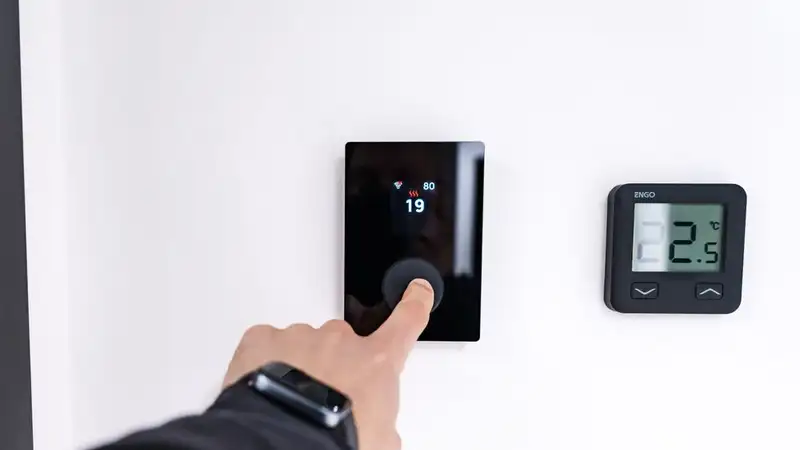
How to checkConfirm Cool mode, a set point below room temperature, and fresh batteries. A compressor short-cycle delay of 3 to 5 minutes after any stop is normal.
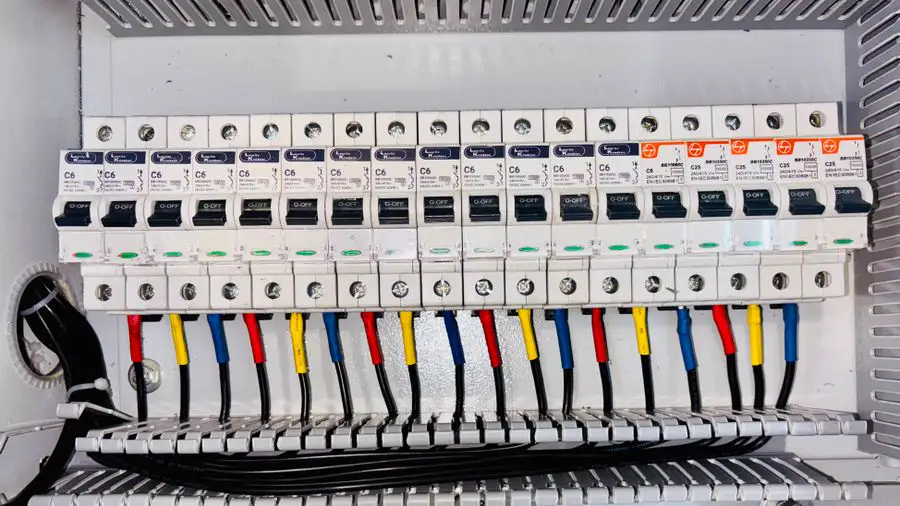
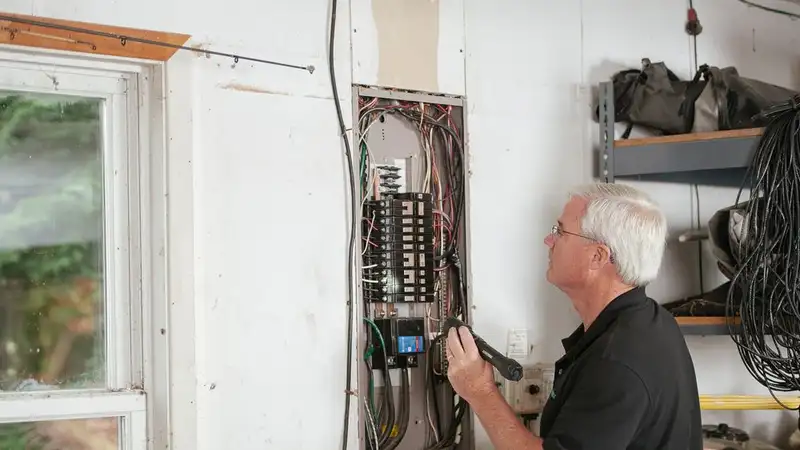
How to checkOpen the panel and look for a breaker in the middle position. The AC uses a two-pole breaker for the outdoor unit and a separate one for the air handler.
How to checkThe indoor fan runs and the thermostat is calling, but the outdoor unit does not start. A stuck or pitted contactor or a dead capacitor is a common reason.
Typical repair costContactor: Too few reports to price (3); Capacitor: Median $310 (most $220–$400), 26 homeowner reports
How to checkOutdoor unit hums or clicks and trips the breaker soon after starting.
Typical repair costCapacitor: Median $310 (most $220–$400), 26 homeowner reports; Compressor: Median $3,000 (most $1,900–$4,000), 43 homeowner reports
Ranks are editorial, not measured. A price is what homeowners reported for that one part or job, not a quote for the cause on that row, and a cause can involve more than one part. Source: HVACPro analysis of 1,611 homeowner-reported quotes and invoices in public Reddit posts dated 2025-01-01 to 2026-09-29. Each price is the median of the reports for that job, and "most" is the middle half of them (25th to 75th percentile). Homeowners reported these prices and we did not verify them.
$190
Median pro diagnostic visit, from 62 homeowner reports
Source: HVACPro analysis of 1,611 homeowner-reported quotes and invoices in public Reddit posts dated 2025-01-01 to 2026-09-29. Each price is the median of the reports for that job, and "most" is the middle half of them (25th to 75th percentile). Homeowners reported these prices and we did not verify them.
Safe to do yourself
These checks need no tools beyond a screwdriver, a hose, or a vacuum. Do them in this order.
1
1. Thermostat not calling for cooling
Free to check
Replace the thermostat batteries.
Set to Cool at a temperature 5 degrees below room temp.
Wait 5 minutes before deciding nothing is happening.
1 Thermostat
2
2. Tripped breaker
Free to check
Carrier says to turn a tripped breaker fully off, wait about 5 minutes, then switch it on once. Trane says to leave a tripped breaker alone and call a pro. If you are unsure, follow Trane.
If it trips again, do not keep resetting it. A breaker that trips again points to an electrical fault, so leave the system off and call a pro.
7 Breaker panel and outdoor disconnect
3
3. Outdoor disconnect switched off or pulled
Free to check
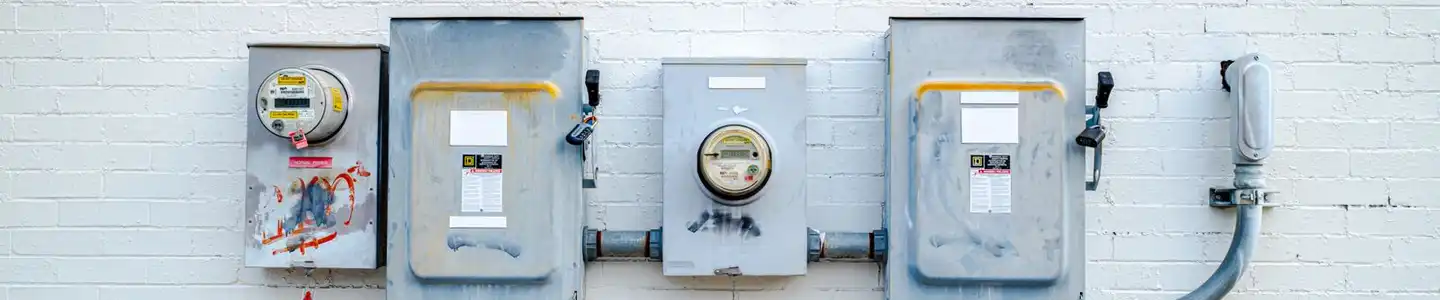
Look at the box: a switch should be On; a pull-out block should be seated in the correct orientation.
Re-seat the block firmly. If you see burn marks, corrosion, or melted plastic, stop and call a pro.
7 Breaker panel and outdoor disconnect
4
4. Float switch tripped by a full drain pan
Free to check
Clear the condensate line following the leaking-water guide.
Check that the pan has drained; the switch resets itself.
5 Condensate drain line, pan and float switch
The hard line: stop here and call a pro
The causes below are not DIY, and we give no repair steps for them. Each carries a specific danger.
HVACPro is a free referral service for homeowners, not an HVAC company. We don't do the work, and we may be paid by the contractor. Check any contractor's license on the state's lookup before you hire.
Pick your city
Every city below has an A-to-Z list of the businesses with an active Florida HVAC license there. The number on each chip is that count.
A pro visit starts with a diagnostic fee. Homeowners reported: Median $190 (most $100–$290), 62 homeowner reports. The repairs behind the causes on this page:
AC will not turn on: repair prices homeowners reported
Middle half of reports Median
Contactor N = 3
too few reports to price
Capacitor N = 26
$310$220–$400
Compressor N = 43
$3,000$1,900–$4,000
Reported price, U.S. dollars
Source: HVACPro analysis of 1,611 homeowner-reported quotes and invoices in public Reddit posts dated 2025-01-01 to 2026-09-29. Each price is the median of the reports for that job, and "most" is the middle half of them (25th to 75th percentile). Homeowners reported these prices and we did not verify them.
Show the repair prices as a table
AC will not turn on: repair prices homeowners reported
Repair
Median
Most (middle half)
Reports
Contactor
Too few reports to price
3
Capacitor
$310
$220–$400
26
Compressor
$3,000
$1,900–$4,000
43
These are national prices. We do not have enough Tampa Bay outer ring reports to publish a local one.
If the repair ends in a full replacement, the closest local cut is Florida: a median of $12,000 (most $9,400–$15,600) across 55 full-system reports, against $13,650 across 588 reports nationwide. See the AC repair cost guide and the AC replacement cost guide for every repair and job we have enough reports to price.
Source: HVACPro analysis of 1,611 homeowner-reported quotes and invoices in public Reddit posts dated 2025-01-01 to 2026-09-29. Each price is the median of the reports for that job, and "most" is the middle half of them (25th to 75th percentile). Homeowners reported these prices and we did not verify them.
4free checks you can do yourself
2causes that need a technician
2hard-line hazards: pro only
Utility rebates
A pro fix for this symptom can end in a replacement. If it does, these Tampa Bay outer ring utility programs pay for qualifying equipment. Confirm your utility and eligibility first.
Residential HVAC rebates from utilities serving the Tampa Bay outer ring, checked 2026-09-30
Work through the checks in the order Trane lists them. First, the thermostat: replace the batteries if the screen is blank, set it to Cool with the fan on Auto, and set the temperature below the indoor temperature. Second, power: confirm the indoor shutoff switch is on and check the breakers for the indoor and outdoor units.
Trane says not to flip a tripped breaker and to call a professional, because it may have tripped from a serious problem. Third, replace a dirty air filter. Fourth, a clogged drain line can shut the system down if it has a condensate safety switch.
Fifth, a frozen evaporator coil can shut the unit off. Sixth, a bad start or dual capacitor keeps the unit from turning on and needs a technician.
My AC breaker keeps tripping. Can I just reset it?
Carrier and Trane differ on the first reset. Carrier says to turn the breaker fully off, wait about 5 minutes, then switch it back on. Trane says not to flip a tripped breaker and to call an HVAC professional.
Either way, if it trips again, leave the system off and have a qualified HVAC professional inspect it for an electrical fault. The U.S. Consumer Product Safety Commission lists an appliance that repeatedly trips a circuit breaker as a defect that could cause a fire or shock hazard.
Is it safe to reset the disconnect at the outdoor unit?
Checking it is a standard step: Carrier lists a disconnect that was turned off or pulled out as a common reason an air conditioner will not turn on. Do not open the box or the unit's panel.
OSHA notes that there is still power to the supply side of a disconnect, and Lennox warns that line voltage is present at all components of units with single-pole contactors when the unit is not running. Lennox says to disconnect all remote electric power supplies before opening an access panel.