1
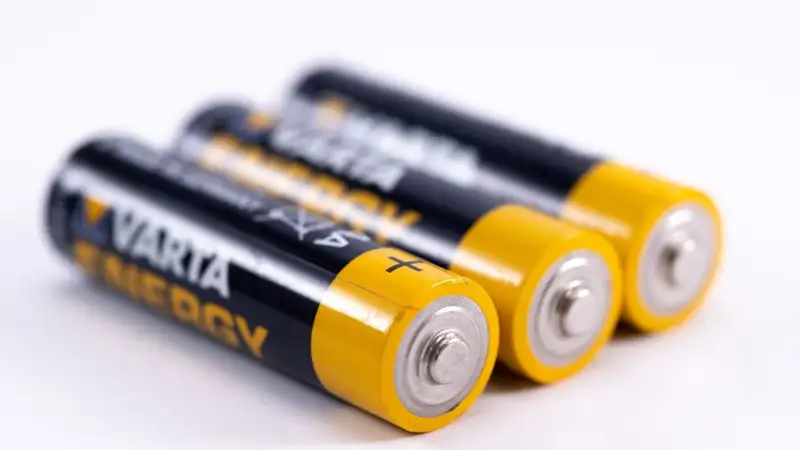
Dead or weak batteries
You, safely1Part on the diagramHow to checkA blank or fading display, or a low-battery icon, on a battery-powered thermostat.
Typical repair costFree to check.
DIY troubleshooter · causes ranked by how often each turns out to be the problem, in our judgment (no dataset ranks them)
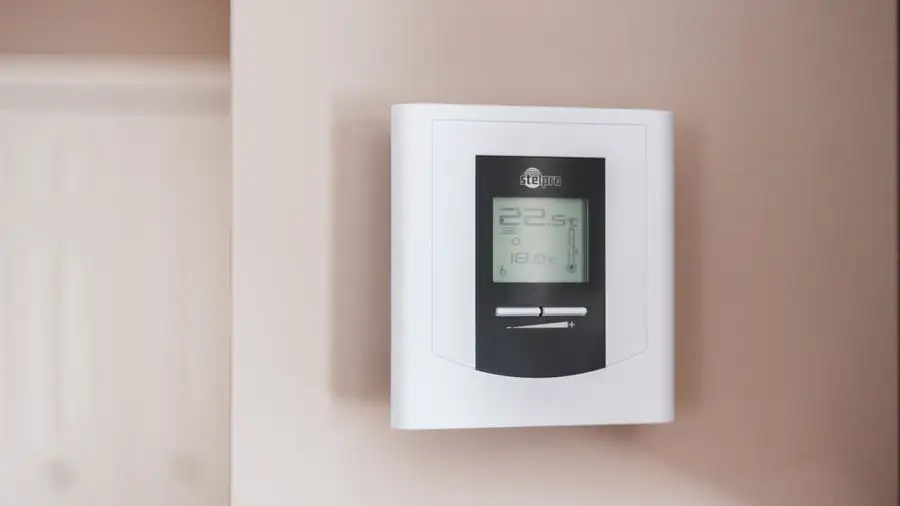
The screen is dark, the unit does not respond, or it shows a reading but the system never starts. Most of these are power problems at the thermostat, not a broken HVAC system.
Source: HVACPro analysis of 1,611 homeowner-reported quotes and invoices in public Reddit posts dated 2025-01-01 to 2026-09-29. Each price is the median of the reports for that job, and "most" is the middle half of them (25th to 75th percentile). Homeowners reported these prices and we did not verify them.
Simplified drawing, not to scale. Real systems vary: the indoor unit can sit in an attic or closet, the ducts can run in the attic or under the floor. Original illustration, not a photo.
Stock photo, not our work. Photo by Yusuf Çelik via Pexels.
How to checkA blank or fading display, or a low-battery icon, on a battery-powered thermostat.
Typical repair costFree to check.
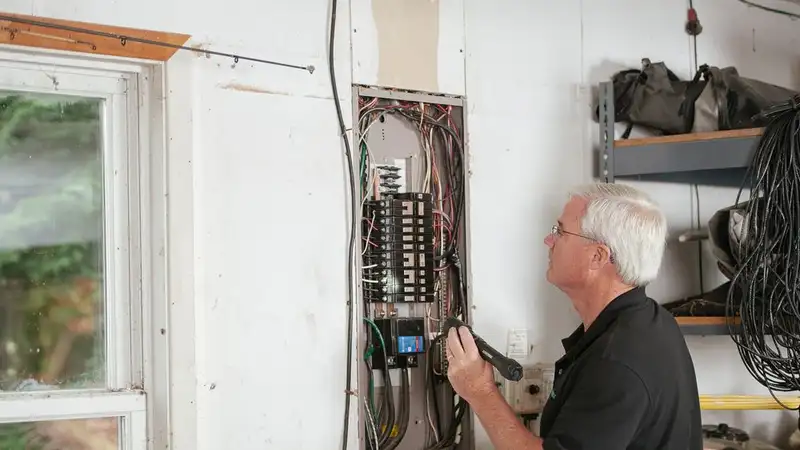
How to checkA wired thermostat gets 24 volt power from the indoor unit. If the air handler has no power, the thermostat goes dark. Look for a tripped breaker and a wall switch beside the air handler that looks like a light switch.
Typical repair costFree to check.

How to checkIf the thermostat died right after a wet spell and the drain pan is full, the float switch cut the low-voltage power to protect the ceiling.
Typical repair costFree to check.
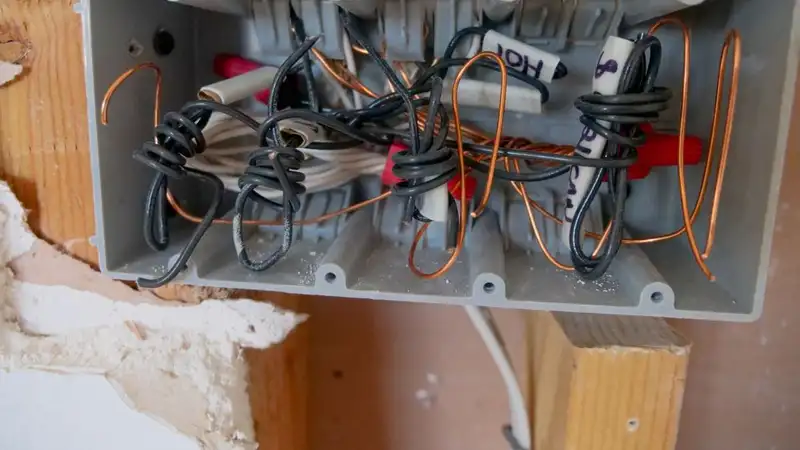
How to checkWith the cover off, check that each colored wire is seated in its terminal and none has slipped out or has bare copper touching another terminal.
Typical repair costFree to check.
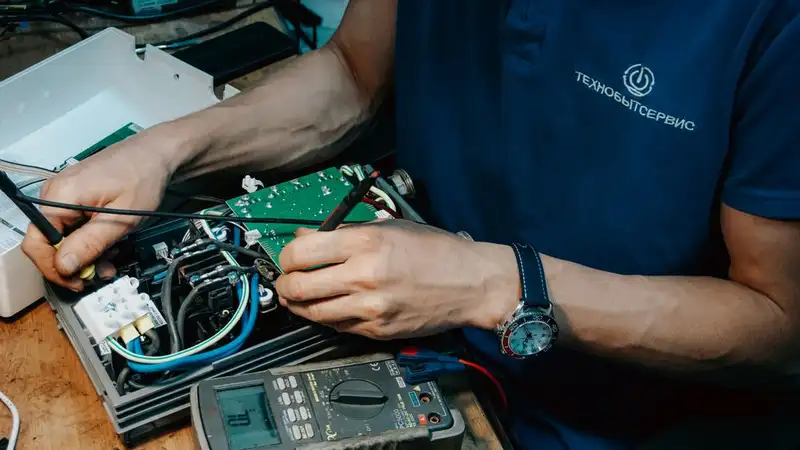
How to checkFresh batteries or confirmed power, a dead screen, and no click from the indoor unit. The 3 to 5 amp fuse on the control board or the 24 volt transformer has failed, and something usually caused it, such as a pinched wire.
Typical repair costNo repair price stat for this cause. A diagnostic visit runs: Median $190 (most $100–$290), 62 homeowner reports.
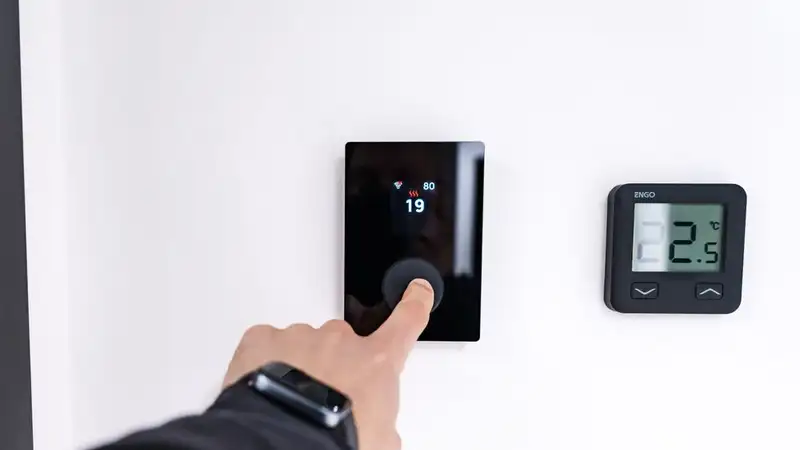
How to checkRecent thermostat swap, no common (C) wire, or a heat pump system with a thermostat set for a furnace. The new unit may never power up or may run the wrong equipment.
Typical repair costThermostat: Median $580 (most $500–$700), 12 homeowner reports
Ranks are editorial, not measured. A price is what homeowners reported for that one part or job, not a quote for the cause on that row, and a cause can involve more than one part. Source: HVACPro analysis of 1,611 homeowner-reported quotes and invoices in public Reddit posts dated 2025-01-01 to 2026-09-29. Each price is the median of the reports for that job, and "most" is the middle half of them (25th to 75th percentile). Homeowners reported these prices and we did not verify them.
$190
Median pro diagnostic visit, from 62 homeowner reports
Source: HVACPro analysis of 1,611 homeowner-reported quotes and invoices in public Reddit posts dated 2025-01-01 to 2026-09-29. Each price is the median of the reports for that job, and "most" is the middle half of them (25th to 75th percentile). Homeowners reported these prices and we did not verify them.
These checks need no tools beyond a screwdriver, a hose, or a vacuum. Do them in this order.
1 Thermostat
7 Breaker panel and outdoor disconnect
5 Condensate drain line, pan and float switch
1 Thermostat
The transformer steps 240 or 120 volts down to 24 volts. Its input side carries line voltage, so it is a 240 volt or 120 volt shock hazard inside a panel you should not open.
Wrong wiring on a heat pump or a system with a gas furnace can make heat and cooling run at once, or lock out a safety. Have the installer confirm wiring for your equipment type before further tries.
Stock photo, not our work. Photo by Alex Domínguez via Pexels.
Open
Need a licensed HVAC pro in the Tampa Bay outer ring? Call and we'll connect you with a licensed local contractor.
HVACPro is a free referral service for homeowners, not an HVAC company. We don't do the work, and we may be paid by the contractor. Check any contractor's license on the state's lookup before you hire.
Every city below has an A-to-Z list of the businesses with an active Florida HVAC license there. The number on each chip is that count.
Counts: businesses with an active license and a city address in the Tampa Bay outer ring, from FL DBPR construction licensee extract (CONSTRUCTIONLICENSE_1.csv), retrieved 2026-10-05. A license says the state permits the work, not that the work is good.
A pro visit starts with a diagnostic fee. Homeowners reported: Median $190 (most $100–$290), 62 homeowner reports. The repairs behind the causes on this page:
Reported price, U.S. dollars
Source: HVACPro analysis of 1,611 homeowner-reported quotes and invoices in public Reddit posts dated 2025-01-01 to 2026-09-29. Each price is the median of the reports for that job, and "most" is the middle half of them (25th to 75th percentile). Homeowners reported these prices and we did not verify them.
| Repair | Median | Most (middle half) | Reports |
|---|---|---|---|
| Thermostat | $580 | $500–$700 | 12 |
These are national prices. We do not have enough Tampa Bay outer ring reports to publish a local one.
See the AC repair cost guide and the AC replacement cost guide for every repair and job we have enough reports to price.
Source: HVACPro analysis of 1,611 homeowner-reported quotes and invoices in public Reddit posts dated 2025-01-01 to 2026-09-29. Each price is the median of the reports for that job, and "most" is the middle half of them (25th to 75th percentile). Homeowners reported these prices and we did not verify them.
No utility rebate applies to this repair. The programs on file pay for replacement equipment or a tune-up, not for a repair like this one.
Stock photo, not our work. Photo by ready made via Pexels.
Honeywell lists weak batteries, no power to the HVAC system, a tripped breaker, and an open furnace door safety switch. Replace the batteries first.
Then check the breaker for the furnace or air handler, confirm the furnace or air handler service switch is on, and make sure the access panel is closed. A hardwired thermostat may get 24 V power from the furnace or air handler, so new batteries will not fix a blank screen if that power is missing.
Checked against: Honeywell Home: Honeywell Thermostat Not Working: Troubleshooting Guide. Pages opened 2026-09-30.
Often yes. Turn off power to the heating and cooling system at the circuit breaker, furnace switch, or equipment service switch first. Photograph the old wiring and label each wire by its terminal letter, not its color.
Pick a thermostat that supports your system type, such as a heat pump or a conventional system. Some systems, including heating-only, cooling-only, zoned, and heat pump systems, need a common (C) wire or a compatible power accessory. Call a technician if you have high-voltage wiring, thick wires with wire nuts, unlabeled wires, or a heat pump setup you are unsure about.
Checked against: Google Nest: Learn about the common or C wire; Google Nest: Set up a Nest Learning Thermostat (4th gen) Pro; Honeywell Home: Thermostat Installation Guide. Pages opened 2026-09-30.
Set the thermostat to Cool with a temperature below the room reading, then wait about 5 minutes. Honeywell says many thermostats hold a built-in compressor protection delay, commonly around 5 minutes, after a power interruption, a mode change, or a recent cooling cycle. If the AC still does not start, check power to the HVAC system and the outdoor unit, including the breakers for the indoor and outdoor units.
Trane adds that a clogged drain line can shut down a system that has a condensate safety switch. If it still will not start, call a technician.
Checked against: Honeywell Home: Honeywell Thermostat Not Working: Troubleshooting Guide; Trane: AC Not Turning On. Pages opened 2026-09-30.