HVACPro(813) 851-3418

Heating in the Tampa Bay outer ring

5 service pages · prices from homeowner-reported quotes, 2025-01-01 to 2026-09-29

Heating in the ring is mostly an electric question. The Census ACS counts 91 percent of ring homes as heated with electricity, 6 percent with utility gas and 1 percent with propane (Census ACS). Heating degree days run only 434 to 676 a year against 3,149 to 3,928 cooling degree days (NOAA normals), so a heating repair here is usually a small share of the year's HVAC work.

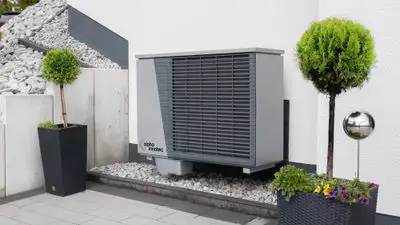
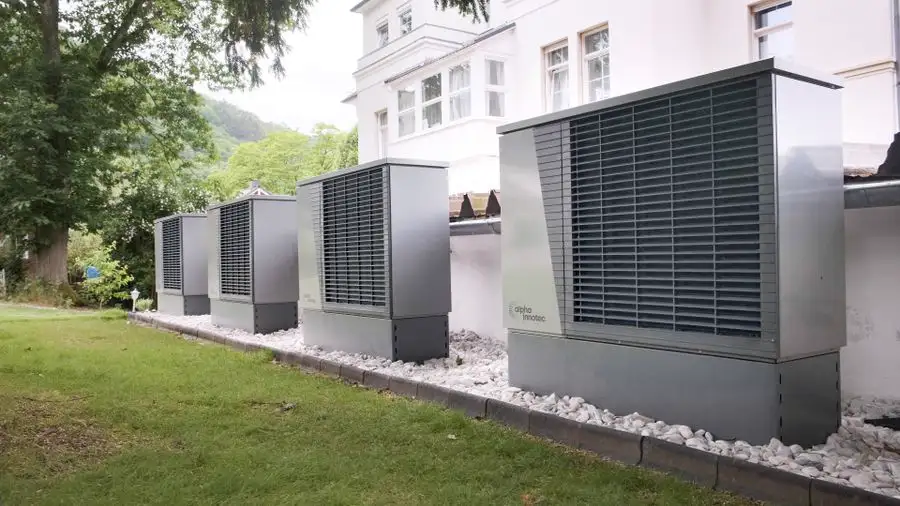
Row of gray outdoor heat pump units on the lawn beside a house
Stock photo, not our work. Photo by alpha innotec via Pexels.

An electrically heated home is either on a heat pump or on electric resistance heat strips, and the Census cannot tell which. If yours is a heat pump, heat pump repair and heat pump replacement apply.

If it is a straight AC with strips or a gas furnace, use furnace and heat strip repair. For a single room, an addition or a house without ducts, see mini-split installation and mini-split repair.

Heating services

Source: HVACPro analysis of homeowner-reported quotes and invoices in public Reddit posts, 2025-01-01 to 2026-09-29. Each service page shows the middle half and the report count. Repair medians are U.S.-wide. Card photos are stock images, not our work, credited on each service page.

Where heating work happens in the system

Heating: the parts these jobs touch
Heating: the parts these jobs touchA cross-section of a house. Indoors: a wall thermostat, an indoor unit in a closet with an air filter, blower and evaporator coil, supply ducts in the attic with ceiling vents, a condensate drain line that exits through the wall, and a breaker panel. Outdoors: the condenser unit on a pad, joined to the indoor unit by two refrigerant lines and fed through a disconnect box. Highlighted on this page: Indoor unit: blower and evaporator coil; Outdoor unit: compressor, fan and condenser coil; Breaker panel and outdoor disconnect; Refrigerant lines.
  1. ThermostatThe wall control. It tells the system when to run.
  2. Air filterCatches dust before the air reaches the blower and coil.
  3. Indoor unit: blower and evaporator coil on this pageThe blower moves the air; the cold coil cools it.
  4. Ducts and ventsCarry cooled air to the rooms and bring return air back.
  5. Condensate drain line, pan and float switchCarries off the water the coil pulls out of the air.
  6. Outdoor unit: compressor, fan and condenser coil on this pageMoves the heat from your house to the outdoors.
  7. Breaker panel and outdoor disconnect on this pageThe power feed to the system, and its local shut-off.
  8. Refrigerant lines on this pageTwo copper lines that link the indoor coil to the outdoor unit.

Simplified drawing, not to scale. Real systems vary: the indoor unit can sit in an attic or closet, the ducts can run in the attic or under the floor. A heat pump has these same parts and also runs in reverse to heat. A mini-split has no ducts or air handler. Original illustration, not a photo.

5

heating jobs, each with its own service page, reported prices and local data

Find a licensed HVAC pro in the Tampa Bay outer ring

Open

Featured pro slot open for the Tampa Bay outer ring

Need a licensed HVAC pro in the Tampa Bay outer ring? Call and we'll connect you with a licensed local contractor.

Call (813) 851-3418

HVACPro is a free referral service for homeowners, not an HVAC company. We don't do the work, and we may be paid by the contractor. Check any contractor's license on the state's lookup before you hire.

Pick your city

Every city below has an A-to-Z list of the businesses with an active Florida HVAC license there. The number on each chip is that count.
Before you hire

Counts: businesses with an active license and a city address in the Tampa Bay outer ring, from FL DBPR construction licensee extract (CONSTRUCTIONLICENSE_1.csv), retrieved 2026-10-05. A license says the state permits the work, not that the work is good.

Heating fuel and heating degree days by city

Share of occupied homes heated with electricity, by city
  1. New Port Richey
    96.7%
    New Port Richey: 96.7%
  2. Zephyrhills
    95.3%
    Zephyrhills: 95.3%
  3. Plant City
    94.9%
    Plant City: 94.9%
  4. Spring Hill
    94.9%
    Spring Hill: 94.9%
  5. Lakeland
    94.4%
    Lakeland: 94.4%
  6. Largo
    93.6%
    Largo: 93.6%
  7. Clearwater
    92.6%
    Clearwater: 92.6%
  8. Lutz
    92.3%
    Lutz: 92.3%
  9. Pinellas Park
    92.1%
    Pinellas Park: 92.1%
  10. Brandon
    91.2%
    Brandon: 91.2%
  11. Riverview
    89.2%
    Riverview: 89.2%
  12. Land O' Lakes
    88.8%
    Land O' Lakes: 88.8%
  13. Wesley Chapel
    78.1%
    Wesley Chapel: 78.1%
  14. Apollo Beach
    76.7%
    Apollo Beach: 76.7%

Percent of occupied homes whose main heating fuel is electricity (includes heat pumps and electric resistance heat).

Sources: Census ACS 5-year 2020-2024 (B25034, B25035, B25040); NOAA U.S. Climate Normals 1991-2020. The Census does not separate heat pumps from resistance heat.

Show every fuel and heating degree days as a table
Share of occupied homes by main heating fuel (ACS 5-year 2020 to 2024) and yearly heating degree days (NOAA 1991 to 2020)
CityElectricityUtility gasPropaneHeating degree days
Apollo Beach76.7%19.7%1.4%499
Brandon91.2%5.9%1%436
Clearwater92.6%4.4%0.4%447
Lakeland94.4%3.6%0.6%444
Land O' Lakes88.8%8.2%1%619
Largo93.6%2.8%0.6%447
Lutz92.3%4.5%1.6%434
New Port Richey96.7%1%0.1%589
Pinellas Park92.1%3.4%0.6%447
Plant City94.9%2.4%0.8%436
Riverview89.2%7%1.7%499
Spring Hill94.9%2.1%0.6%676
Wesley Chapel78.1%18.3%1.2%619
Zephyrhills95.3%0.8%1.4%619

Sources: Census ACS 5-year 2020-2024 (B25034, B25035, B25040); NOAA U.S. Climate Normals 1991-2020. Electricity includes heat pumps and electric resistance heat; the Census does not separate them.

Other categories